.png)
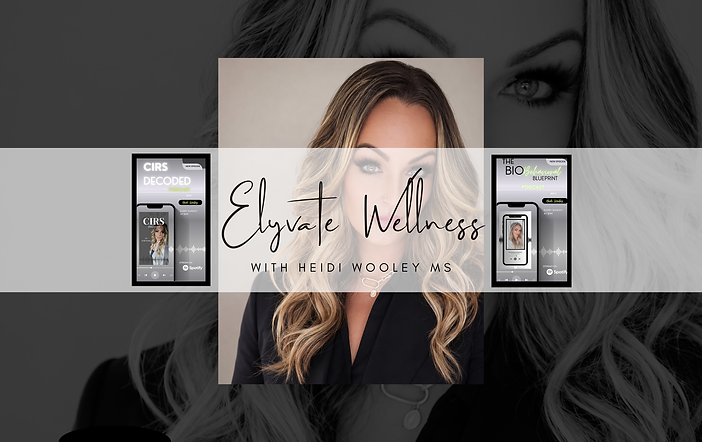
Work with Heidi Wooley M.S.
.png)
.png)
Heidi Wooley
MS Psychology | PhD Candidate (Psychology)
Women's Metabolic Neurobehavioral Specialist and Researcher
Shoemaker Proficiency Partner Diplomate
Certified Brain Health Practitioner
MoCA Certified Rater
.png)
.png)
%20(1).png)
%20(2).png)


.png)
Improve Patient Outcomes by Connecting Biology, Brain Function, and Behavior
When patients struggle to follow treatment recommendations, sustain lifestyle changes, or improve despite receiving appropriate guidance, the problem is not always a lack of motivation. Their behavior may be reflecting underlying biological stress, altered brain function, cognitive burden, or a care plan that does not adequately account for how these systems interact.
The B3 Model of Care™ provides medical, mental health, and wellness professionals with a structured framework for understanding patient care through the interconnected relationship between biology, brain function, and behavior.
Rather than treating symptoms, cognition, emotional functioning, and health behaviors as separate concerns, the B3 Model of Care™ helps professionals examine how changes in one domain may influence the entire patient experience. This integrated perspective can support more individualized education, more effective behavior-change strategies, and greater patient adherence.
About Heidi Wooley M.S.
I am a Doctoral Candidate in Educational Psychology specializing in Women's Metabolic Neurobehavioral Science. My research focuses on how underlying biological conditions impact brain function and shape health behavior compliance.
My academic and professional work focuses on how biological factors, including metabolic dysfunction, inflammation, hormonal transitions, chronic stress, sleep disruption, and chronic illness, may affect cognition, emotional regulation, executive functioning, motivation, and a patient’s ability to implement health recommendations.
I hold a Master of Science in Psychology with a specialization in Educational Psychology and a Bachelor of Science in Psychology. My additional professional training includes:
-
Shoemaker Proficiency Partner Diplomate training in chronic inflammatory response syndrome
-
Amen Clinics Certified Brain Health Coach
-
Certified Montreal Cognitive Assessment rater (MoCA)
-
Specialized study in educational psychology, cognitive neuroscience, health behavior, motivation, and patient adherence
I developed the B3 Model of Care™ to help bridge an important gap in healthcare: the gap between identifying what a patient needs to do and understanding what may be affecting their ability to do it.
Why the B3 Model of Care™ Matters
Traditional care often separates physical health, mental health, cognitive function, and behavior. Yet patients experience these systems simultaneously.
A patient experiencing inflammation, insulin resistance, hormonal changes, disrupted sleep, chronic stress, or mitochondrial dysfunction may also experience changes in attention, memory, emotional regulation, impulse control, decision-making, and motivation. These changes can directly influence whether that patient is able to organize a treatment plan, maintain new routines, regulate eating behaviors, attend appointments, or follow through consistently.
The B3 Model of Care™ helps professionals move beyond assumptions such as “the patient is unmotivated” or “the patient is noncompliant.” Instead, it encourages a more clinically useful question:
What biological and neurological factors may be influencing this behavior, and how can the care plan be adapted accordingly?
Benefits for Professionals and Their Patients
Integrating the B3 Model of Care™ into patient education and behavior-change support can help professionals:
-
Identify biological and cognitive barriers that may be affecting adherence
-
Understand behavior as clinically relevant information rather than a character flaw
-
Deliver health education in ways that are easier for patients to understand and implement
-
Develop more individualized and realistic treatment recommendations
-
Recognize how executive function, memory, attention, stress, and emotional regulation affect follow-through
-
Improve communication between medical, psychological, and health-coaching professionals
-
Create care plans that reflect the patient’s current cognitive and physiological capacity
-
Increase patient engagement, self-efficacy, and long-term participation in care
-
Reduce shame-based approaches to motivation and behavioral compliance
-
Support more coordinated, whole-person care
Professional Training and Consultation
Individual Professional Consultation
I work one-on-one with physicians, psychologists, psychiatrists, health coaches, and other healthcare professionals who want to incorporate the B3 Model of Care™ into their existing practice.
Consultations may include:
-
Applying the model to specific patient populations
-
Identifying biological, cognitive, and behavioral feedback loops
-
Improving patient education and treatment-plan delivery
-
Developing adherence-support strategies
-
Integrating brain-based behavior-change principles into clinical care
-
Adapting the framework to women’s health, metabolic health, chronic illness, or complex patient presentations
The B3 Model of Care™ is not intended to replace a professional’s clinical training or scope of practice. It provides an additional framework professionals can use to understand the factors influencing patient behavior and strengthen the delivery of care.
B3 Model of Care™ Training for Health Coaches
The B3 Model of Care™ professional training course teaches health coaches how to evaluate behavior through a broader biological and neurological lens.
Health coaches learn how to:
-
Recognize when behavior may be connected to biological or cognitive stress
-
Understand the relationship between physiology, brain function, and daily behavior
-
Support clients without diagnosing or practicing outside their professional scope
-
Improve the delivery of education and lifestyle recommendations
-
Use evidence-informed strategies to strengthen motivation and adherence
-
Communicate more effectively with clients and collaborating healthcare providers
-
Create behavior-change plans that reflect the client’s actual capacity, barriers, and stage of readiness
This training is especially relevant for coaches working in women’s health, metabolic health, brain health, chronic illness, functional wellness, lifestyle medicine, and behavior change.
Conferences, Workshops, and Professional Education
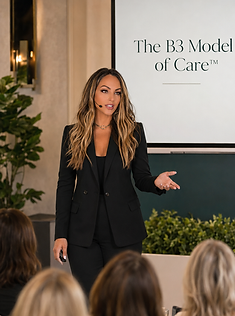
I am available to speak at medical conferences, behavioral health events, wellness conferences, professional workshops, and organizational trainings.
Presentation topics can be customized for the audience and may include:
-
The B3 Model of Care™: Connecting Biology, Brain Function, and Behavior
-
When “Noncompliance” Is a Clinical Signal
-
The Neurobiology of Patient Adherence
-
How Metabolic and Hormonal Health Influence Cognition and Behavior
-
Translating Health Education Into Sustainable Patient Action
-
Women’s Physiology, Executive Function, and Behavior Change
-
Improving Patient Outcomes Through Biobehavioral Care
-
Moving Beyond Motivation: Identifying the Barriers Beneath Patient Behavior
Each presentation combines current scientific research with practical strategies professionals can apply within their existing roles.
A More Complete Way to Understand Patient Behavior
Patients do not make health decisions with behavior alone. They make them through a brain that is continuously responding to biological conditions, environmental demands, previous experiences, stress, available resources, and the way health information is delivered.
When professionals understand that feedback loop, they are better positioned to provide care that patients can realistically understand, implement, and sustain.
The B3 Model of Care™ helps make that connection visible.
Professional consultations, health-coach training, conference presentations, and organizational education are available for medical, mental health, and wellness professionals seeking a more integrated approach to patient care.
Let’s Work Together
Fill out the form and let me know if you are interested in working one-on-one, health coach training, or a speaking event.
Santa Maria, CA 93454
E-Mail: heidiwooley@elyvatewellness.com


